
New White Paper Published: Evaluating Conformal Coatings During Condensation Testing
Our newly released technical white paper exploring how modern condensation testing can be used to evaluate the real-world performance of conformal coatings on electronic assemblies.
Authored by Dr Chris Hunt, Chief Technology Officer at GEN3, alongside his colleagues at GEN3 and collaborators from MacDermid Alpha Electronics Solutions, the paper presents the latest research into how different conformal coating technologies protect electronic assemblies when exposed to condensation—a critical challenge for electronics operating in harsh and safety-critical environments.
Addressing a Long-Standing Reliability Challenge
Condensation is one of the most demanding environmental stresses electronic assemblies can encounter. Even a thin film of moisture can create conductive pathways between exposed component terminations, leading to leakage currents, intermittent faults, or catastrophic failure.
While conformal coatings are widely used to protect assemblies, their effectiveness depends on achieving complete and consistent coverage across increasingly complex component geometries. Sharp edges, fine-pitch devices and densely populated assemblies remain particularly challenging to protect.
The new white paper investigates how different coating chemistries perform under controlled condensation conditions, providing valuable insight into the strengths and limitations of today's coating technologies.
A New Approach to Condensation Testing
A major focus of the paper is the use of GEN3's innovative platen-based condensation testing system, which 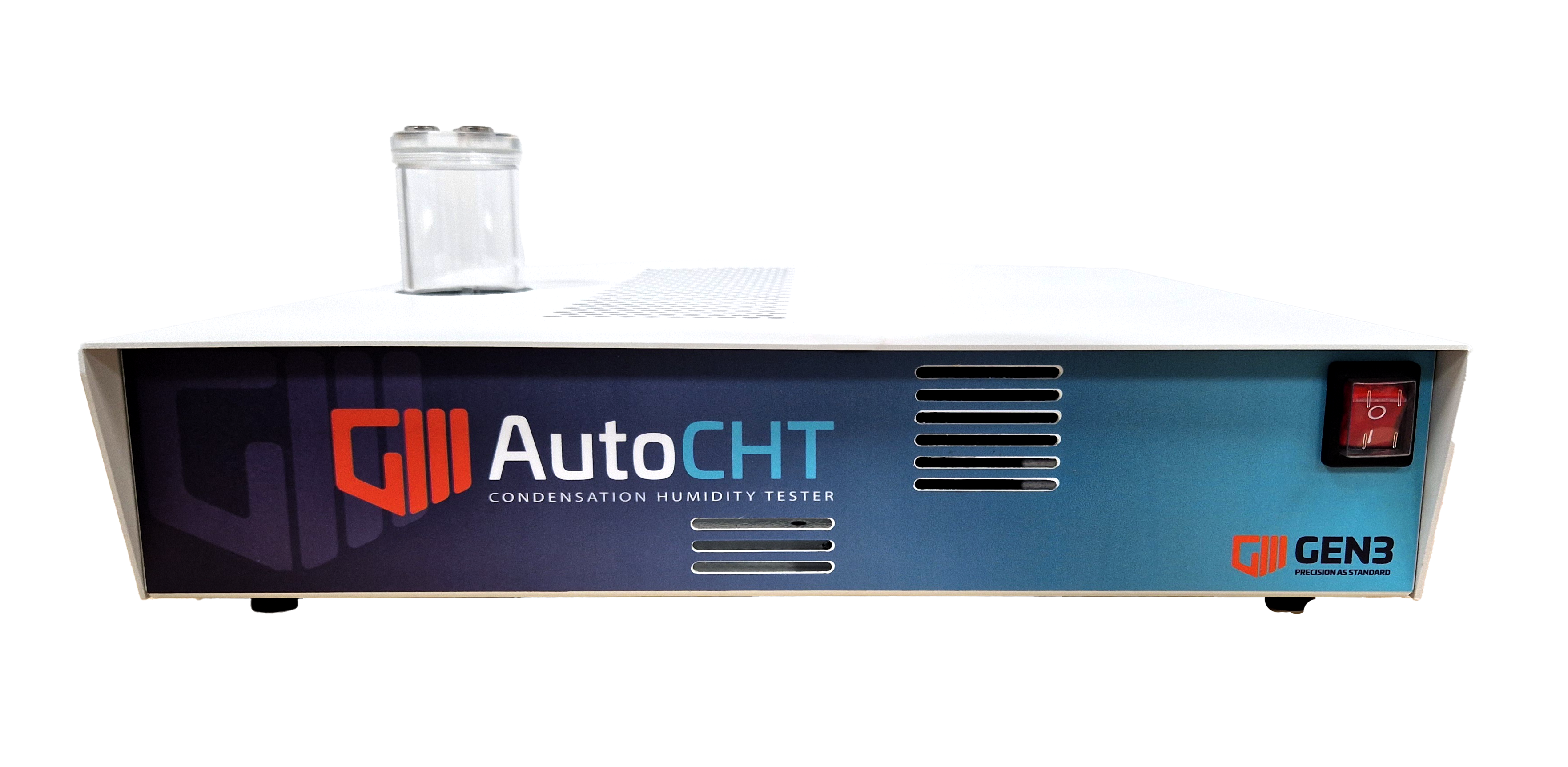 enables precise control of the temperature below the dew point. Unlike traditional condensation methods that rely on modifying humidity chamber operation, the new approach delivers repeatable, accurately controlled condensation directly on the test sample.
The research demonstrates that controlling the test surface temperature to within 0.1°C is essential for producing meaningful and repeatable results, highlighting why previous condensation methods have often struggled to provide consistent data.
Comparing Ten Conformal Coating Systems
The study evaluated ten different conformal coating formulations, including modified silicone rubber (MSR), acrylic and urethane acrylate technologies, applied across industry-standard NPL TB164 test vehicles.
Testing examined protection across a range of component types including:
- 0402 chip components
- 0603 chip components
- QFP packages
- QFN packages
The results reveal significant differences in coating performance depending on both coating chemistry and component geometry. While some coatings provided excellent protection across all component types, others were considerably less effective, particularly on smaller passive components where achieving complete edge coverage is most challenging.
The study also introduces an Increased Dewing Resilience (IDR) metric, providing a practical method for comparing coating performance under controlled condensation conditions.
Faster, More Meaningful Reliability Assessment
One of the key findings is that condensation testing can identify weaknesses in coating coverage far more rapidly than conventional Surface Insulation Resistance (SIR) testing.
Rather than requiring week-long environmental tests, controlled condensation testing can reveal coating deficiencies in approximately 25 hours while providing direct insight into how different package styles respond to moisture exposure.
This capability offers manufacturers, coating suppliers and reliability engineers a powerful new qualification tool for assessing coating performance before products reach the field.
Download the White Paper
The full white paper, "Evaluating Conformal Coatings Ability to Protect During Condensation Testing," provides detailed methodology, experimental data and analysis of the coating technologies evaluated.
It will be of particular interest to engineers working in electronics reliability, automotive electronics, aerospace, defence, industrial electronics and conformal coating development.
Download your free copy today to learn how controlled condensation testing is helping redefine the evaluation of conformal coating performance and improve confidence in electronic assemblies destined for harsh operating environments.